Unearthed
The stories behind the produce
Know Your Farmers with Torello Farm
Author: Interview & editorial by Michelle Siwka
Join us for a Kitchen Table Q & A with Sophie and Mark from Torello Farm
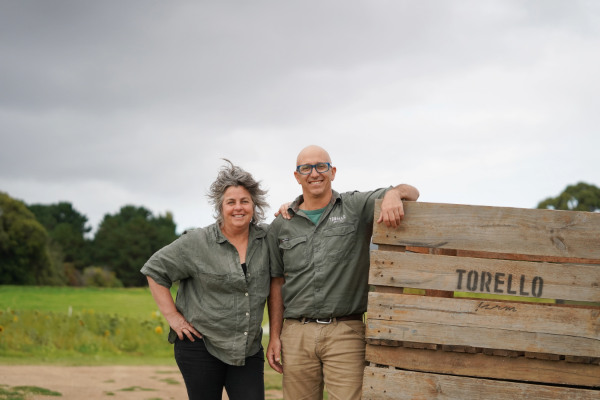
Interview with Mark Brancatisano & Sophie O’Neil
Set within the rich agricultural landscape of the Mornington Peninsula, Torello Farm has become a much-loved, destination farmgate where seasonality, integrity and a deep belief in local food systems guide everything that reaches the shelves. At the heart of it are Sophie and Mark, whose vision has transformed the property into a gathering place for growers, makers and the Peninsula community.
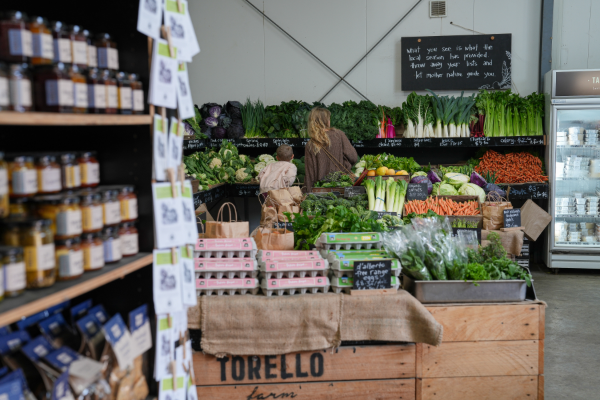
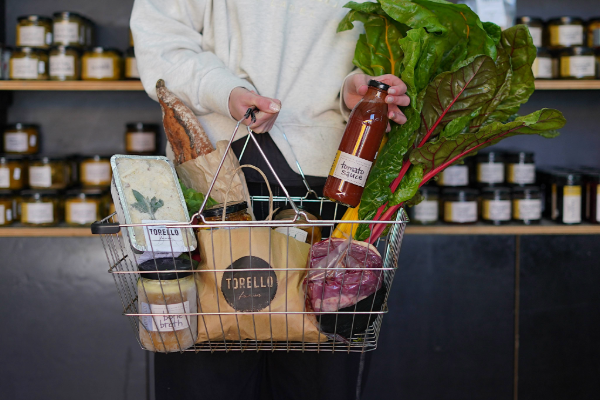
A pioneer of the Peninsula’s farmgate movement, Torello brings together seasonal produce, heritage-breed beef and lamb, and food grown and made by a network of farmers and makers across the region. Through the relationships Sophie and Mark have built with local growers, producers and young farmers entering the industry, the farm has become a pillar of the Peninsula’s food community.
Q1: Tell us a little about the story behind Torello Farm. How did it all begin?
Mark and I met working for an online supermarket, one of the first back in the late ’90s. Mark had set up the Melbourne operations and I was doing the marketing in Sydney, so we’ve both been really connected to the food industry for most of our working lives. Back then the business was based around providoring to restaurants, with a focus on quality and really beautiful produce, working closely with local farmers. Mark would be sourcing unusual and interesting produce like heirloom tomatoes out of the Yarra Valley and I remember writing about a chicken farmer who was supplying beautiful free-range birds.
Then the company was bought by a major supermarket, and all of that went out the window. So we both left. I started a farmers market, which opened my eyes to local food systems and seasonality…things Mark probably knew more about because he’s always worked in produce. Between us we’ve had a fruit shop, worked for a supermarket, done online, had a butcher shop and a retail outlet. Mark’s done wholesale providoring as well, so we feel like we’ve covered a lot of bases in the food industry.
Mark’s family is from here, and when we moved down to the Peninsula we started to see what was happening with farmgates and recognised that this was a really unique place for direct marketing of produce. There’s a strong local customer base and the region has an amazing growing calendar so you can grow such a diverse range of produce 12 months of the year. You don’t really get frosts here and it doesn’t get super-hot, so you can grow so many different types of produce, strawberries, apples, avocados, and so much more. There’s just everything.
It’s also about sourcing product that we want to eat ourselves – that’s when we started looking for small producers with more integrity and many of them ended up being heritage breeds as well. We bought a butcher shop, and we were doing farmers markets with free-range heritage pork.
It’s really just how we are, it’s how we eat. Whether it’s fruit & vegetables or meat, we’re sourcing what feels right to us.
Q2: What’s at the heart of the farm for you both?
The community is the heart of it. That also includes the many farmers here on our own farm. At the moment Alex is here, she used to work in the shop and now she’s out in the fields, a young farmer who can’t afford to buy her own farm yet and really wants to have a go at growing flowers. Then there’s the staff, the customers and the wider farming community around it. It’s all about community, that’s what really inspires us.
Like just the other day, we went up to Paringa Road to meet an Italian couple who were growing capers. When we arrived we saw all these incredible caper bushes planted along the north side of their house. Every day they pick only the ones that are ready and put them into a big jar of salt. When they’ve sourced enough, they jar them for us.
They might only pick a handful each day, but because the caper plants fruit for almost 9 months of the year it eventually all adds up. They’re such a beautiful plant, almost like a succulent, with capers all the way down the branches. And while we were chatting we realised that their family are from the same island off Sicily as Mark’s family. So we rang Mark’s Mum and Dad, and they came to meet them.
It’s all those layers of community that we find so nourishing – we’re always coming home saying, “Guess who we met today?”
Q3: The shelves here reflect a network of growers and makers across the Peninsula. How do those relationships shape the farmgate?
Those relationships absolutely dictate what you see.
We’re not strategic about it at all. When a grower comes in with something, like saucing tomatoes, we might have them for three weeks (or maybe another week or two), and then that’s it. Even though we’ll probably get a hundred calls asking if we still have them, we won’t go and buy them from somewhere else. When they’re done, they’re done.
And that’s really how everything works here. When things are in season they’re here, and when they’re not, they’re not. Obviously there are things that grow year-round, like broccoli, cauliflower or Dutch carrots, which grow well down here. But then there are the things that are really seasonal like zucchini, eggplant or corn.
Q4: I love your line, “Throw away your shopping lists and let the season guide you.” How does the season decide what’s on the shelves?
I wrote that when we first opened because I was so sick of people coming in asking if we had bananas. But it really stuck. And it’s just true. We have loyal customers who find it really exciting shopping with us. Coming here is a bit like going to a farmers’ market – when you arrive you think, ‘what have they got today?’ There’s a sense of anticipation, especially for people who really love cooking.
What we’re seeing now more than ever is that the reach is widening. People really care about where their food comes from. We’ll now see young blokes coming in at five o’clock to pick up a steak and other produce – so we’re reaching a much broader group of people, which is super exciting.
Sometimes there’s pushback, mostly on social media interestingly, and someone might say ‘I’m not paying for that’ but the reality is that when something is in peak season it’s both better quality and better value. Sweet corn is a great example. When it’s plentiful it’s good value but it also tastes amazing. Once it’s picked the flavour starts to deteriorate, so if you’re eating sweet corn in winter that’s travelled down from Queensland, it just doesn’t compare.
People often say to us, ‘your produce here just tastes so great’. And it lasts longer too.
Q5: Your Belted Galloway beef and Dorset Down lamb have a real story behind them. What draws you to these heritage breeds?
It probably started with pork. We became involved with the Rare Breeds Association and that really opened our eyes to all these different animals people were raising. Through that we met Allen and Lizette Snaith who were growing Belted Galloway cattle, and they really helped us starting out. When we moved back down to the Peninsula we had about 100 acres, so we needed to grow something on it. We started raising cattle for them initially, and when the vision for Torello came about we knew we wanted to do beef and lamb as well as vegetables and fruit.
Through the Rare Breeds Trust we also met a woman called Ethel Stephenson. She was really the queen of heritage sheep in Australia and became a very good friend of ours. One day she rang and said there was a flock of Dorset Down sheep in South Australia that were about to be sent to the sale yards. We had actually just eaten Dorset Down lamb at an event run by the Rare Breeds trust and thought it was incredible – the flavour was amazing! So we bought the whole flock.
Part of it is also about preserving the genetics of these animals. In Australia most people grow Angus because they grow quickly and suit feedlot systems, but heritage breeds are completely different. They do grow more slowly, but the flavour and the integrity of the meat is really something else.
Q6: The Future Farmers Pathway Program has helped new growers find their feet on the Peninsula. What inspired it, and what does it mean to you to see those farmers now building their own small businesses?
Very excitingly there’s a real swell of young people who are fundamentally environmentalists wanting to make the world a better place, and they’re doing that by growing food. Land on the Mornington Peninsula is expensive to purchase, which makes it difficult for young farmers to get started. At the same time there are plenty of empty blocks, so the idea is to help people get access to land for farming.
The program keeps evolving, we keep reinventing it depending on the funding we have available at the time. We’ve been fortunate to have had continued support from the Mornington Peninsula Shire all the way through.
Some of the participants are blown away by how generous the farming community has been with sharing knowledge. It all comes back to that sense of community – we’re not in competition with each other. As a farming community we support each other and work together. So the Future Farmers program is incredibly exciting. It’s lovely seeing all these people we’ve helped incubate into farming. They’ve taken many different pathways and it’s really joyful seeing them so immersed in it.
Q7: Sustainability is talked about a lot. What does it look like in practice here, day to day?
For us, it really starts with the farming itself and the healthy ecosystems that develop, the beneficial insects and soil life that result from sustainable practices. As soon as we started farming the land this way, we heard all of these birds that we hadn’t heard before, and when we bring sunflowers into the store, they’ll sometimes be completely covered in ladybirds – those are the kinds of ecosystems you see when chemicals and herbicides aren’t being used, and soil biology is thriving. It’s definitely more labour-intensive though, which is why it works best at a smaller scale.
Regeneration is also a big focus for us. We’ve replanted the creek here at Torello Farm and planted thousands of trees on our property in Tuerong, with the help of volunteers from the Koala Foundation, which has been incredibly rewarding. So many people want to feel like they’re contributing in some way, and for people coming from the city it can be a really meaningful experience to be involved. The impact has been remarkable. The quality of the water in the dam has improved out of sight, it’s so much clearer now, and the whole ecosystem is healthier. It just keeps getting better.
Sustainability also shows up in the way we run the store. We’ve never had plastic bags, and all of the produce is packed in compostable punnets. We are always trying to improve…but it just fits with who we are.
Q8: Is there a job on the farm you secretly love, even if it takes ages?
Mark:
For me it’s simply being out in the paddock with the animals. There’s nothing better than spending time with the cows and seeing how inquisitive they are. Even the chickens gather around, pecking at your boots if you stand in the paddock for a moment, and if the tractor stops you’ll often find them hopping up to investigate. And handling the cattle so regularly means they’re also calm and easy to work with, which is one of the reasons we chose those breeds. We move them frequently between paddocks, which is good for the pasture and keeps the system healthy.
Sophie:
For me it’s often the hunt for new growers. If I hear even a hint of someone growing something unusual, I can become a little obsessive about tracking them down. I remember hearing about a family growing pomegranates somewhere around Balnarring and being determined to find the orchard, scanning Google Maps to work out where it might be. What excites me most is seeing people using the land to grow food. On the Peninsula, where land is so valuable, discovering someone planting an orchard or starting something new is always exciting.
Q9: What’s your favourite way to cook your meat or produce at the moment? Any simple meals you’re loving at home?
The primary cuts like eye fillet, scotch fillet and porterhouse only account for about ten percent of the animal so over the years we’ve really leaned into secondary cuts like Flat Iron, Denver and Merlot steak. When you’ve cooked it, if just let it rest and slice it against the grain it’s just so delicious! It’s also another part of cooking sustainably, you simply can’t live off eye fillet when it’s such a small part of the animal. We had a really great event here about a year ago in conjunction with Simone Watts from Barragunda Dining, where we were teaching people how to use different cuts of beef.
We actually find that the best way to cook most of those cuts is done simply over fire, on a grill, over charcoal or coals. You can’t eat meat any better than that.
From a produce point of view it really depends on what’s in season. At the moment we just can’t get enough of tomatoes, fresh or cooked. We’ll often bring home the really ripe ones and cook up a big pot with fresh basil, which can then go into all sorts of things, from pasta sauces to slow-cooked meats. Our son is obsessed with roasting little snacking capsicums at the moment as well.
Our cooking style is quite simple, very produce driven.
Q10: When you have a day to slow down, what’s your favourite way to enjoy the Peninsula?
We probably need to slow down more, Unfortunately with 2 farms there’s always something to do. We both really enjoy fishing, so if we get the chance we’ll head out on our little boat. But we’re also pretty diehard foodies, borderline obsessed, so a lot of our downtime revolves around food. We love heading out to eat locally, catching up with friends and seeing what people are doing.
We’ve recently been back to Foxey’s Hangout and have been blown away by how good it is. The food is very simple but done incredibly well. Many Little is another favourite, just really good cooks, cooking really good food. We love to pop up there even just to sit at the bar. We went to Sapori di Casa the other day, it’s out in the garden and it’s literally whatever they’re cooking that day. Delicious! Also places like Pizza Luna, really simple, produce driven food – their green demon pizza is awesome. Tulum Store are fantastic as well, always keeping it interesting.
We love those places because there’s a really strong sense of collaboration across the Peninsula food community. We also work closely with some of the chefs, for example, sometimes Ben at Tulum Store will take different cuts from us and turn them into curries which will also be sold through the shop. The same happens with places like Johnny Ripe and Millers, who make pies and sausage rolls using our beef. It’s a really nice way of working together.
Q11: And finally, if someone is visiting for the first time, what’s one local spot they shouldn’t miss?
Bushrangers Bay is pretty special. Flinders Pier is another great spot, particularly when Harry from Flinders Mussels is down there. Even just looking down at the water is amazing.
Our family loves Point Leo Beach. We tend to gravitate to that side of the Peninsula a bit more because of its natural beauty.
Walking the rail trail from Merricks up towards Red Hill is great. Grabbing a coffee at either Merricks General Store or Cellar & Pantry at either end…or maybe a coffee at one end, and a wine at the other?