
Unearthed
The stories behind the produce
A Rich farming History
Author: Richard Cornish
A rich history of quality produce.
The fertile country and bountiful waters of the Mornington Peninsula have fed people for many generations.
For the Boonwurrung / Bunurong people, the traditional owners of these lands and waters, the bays were foraging grounds for native oysters, mussels, and other shellfish. Fish were caught on shell hooks tied to stringy bark lines. The grassy woodlands, kept clear by firestick farming, raised countless kangaroos and emus.
Early explorers remarked on the great swathes of grassy woodland being ideal for grazing. By the 1840s, vast cattle and sheep runs were established from Arthurs Seat to Coolart.
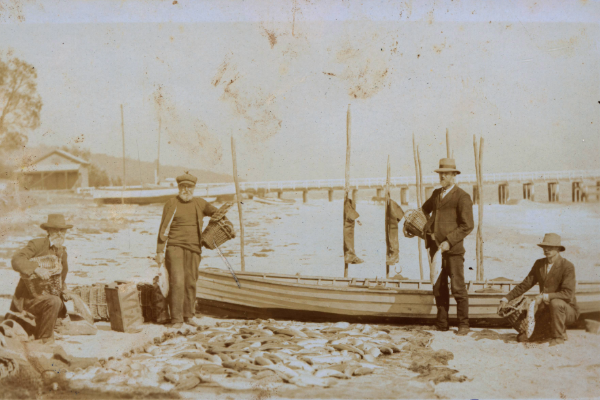
The European Colonisers soon found oysters and mussels harvesting them in the shallow waters off the Mornington Peninsula. Boatloads were sailed up Port Phillip to Melbourne where wealthy colonists and lucky gold diggers washed them down with French Champagne chilled on ice imported from America.
The bays and Bass Strait became the grounds for small fishing fleets harboured in Mornington, Sorrento, Hastings, and Flinders, catching snapper, barracouta, whiting and shark. Artisan commercial fishing still occurs in Port Phillip and mussel and oyster farms now thrive in both Western Port and Port Phillip.
After the 1850s gold rush, the need to feed a growing population saw the Victorian colonial government break up the squatting runs into smaller farms. The landscape became more ordered as orchards were planted in Moorooduc, Hastings, and Tyabb. Farmers formed cooperatives and pooled resources to build cool rooms, many of which remain today.
After the 1890s depression, the towering forests of Red Hill were gazetted by the government for farmland. Soon cherries, pears, and apples were planted in the deep, rich soil. Descendants of those pioneering orcharding families still grow fruit to this day.
Around the same time, colonial wines were being exported to England, with an 1890s government report mentioning 14 Mornington Peninsula grape growers. However, with no winery on the Peninsula and tough economic conditions in the 1920s, focus was turned to developing the apple and pear orchards.
Peninsula’s wine renaissance started in the 1970s when a few, forward-thinking individuals recognized the cool climate and planted French varietals, such as chardonnay and pinot noir, forming the foundation of today’s successful industry.
Between the wars, there were two major passionfruit farms in Dromana: OT Dixon on Boundary Road and Passiflora on Harrisons Rd, home to Passiflora soft drink. That barn still exists today.
The post-war period saw an expanding population with a hunger for both more food and more land for suburbia. Market gardens moved from Melbourne’s sand belt into areas like Boneo, Somerville and Baxter. Close to a thriving market, the Peninsula also proved the perfect home for thousands of egg-laying and meat chickens, with farms dotted amongst the orchards and dairy farms. Prime lambs and wool, from cross-bred sheep, were dominant on the pastures of the Peninsula until the 1970s when many farmers switched to beef cattle.
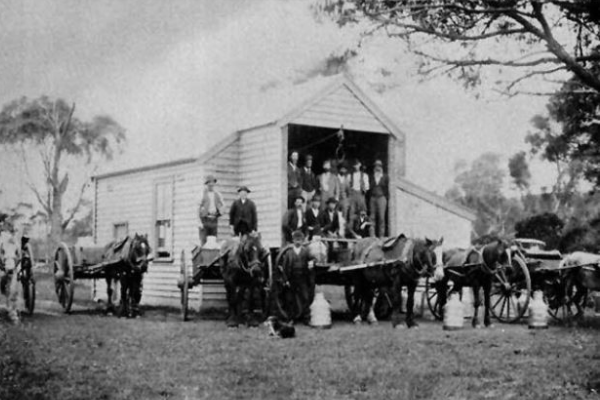
With its reliable rainfall and rich soils, the Peninsula proved to be good dairying country. Milk was separated on small farms, the skim milk fed to pigs, and the cream sent to butter factories, some built on creeks near Shoreham and Flinders. Refrigerated milk tankers operated from the 1960s until 1985, taking milk to processors in Chelsea and Sunbury. The last two dairy farms were in Main Ridge and Pearcedale. Today, a goat dairy continues the tradition in Main Ridge.
That rich tradition of producing food and drinks on the Peninsula has never stopped. In fact, this rich rural region is more diverse, produces more product, and employs more people than ever before. From seafood to fresh fruit and vegetables, to wine and artisan products, the Mornington Peninsula is recognised far and wide for its consistent quality of food and drink. A tradition celebrated by Mornington Peninsula Produce.

The Mornington Peninsula is recognised far and wide for its consistent quality of food and drink. A tradition celebrated by Mornington Peninsula Produce.
Unearth the Producers in this Article