Unearthed
The stories behind the produce
know Your Farmers with Mock red Hill
Author: Michelle Siwka
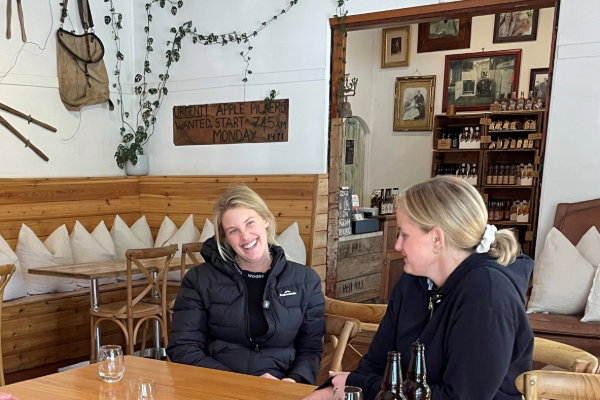
Join us for a kitchen table Q & A with sisters Mardi and Sheryn from Mock.
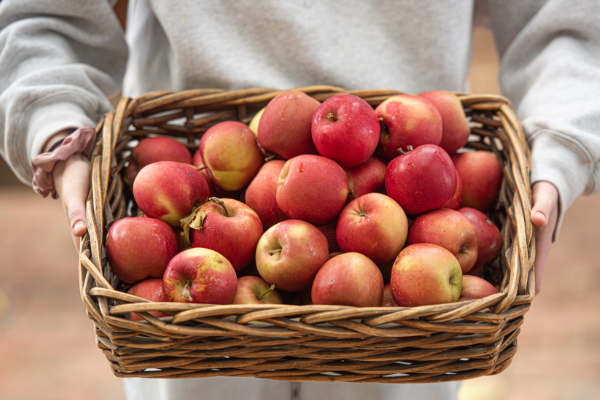
Tucked into the cool green slopes of Red Hill, Mock Orchards has been part of the Peninsula landscape for more than 60 years. Four generations of the Mock family live and work on this land, growing apples with care, curiosity, and a deep respect for nature. What began as a small orchard has evolved into a thriving biodynamic farm, cider lounge, and family business that continues to adapt with each new generation.
Sisters Sheryn and Mardi now lead the farm alongside their dad Nev and Granny Wilma Mock, who still visits the cellar door for a daily coffee. Their story is one of family tradition, sustainable farming, and a shared love of good food grown the right way, a legacy that comes alive when you visit the farm, wander through the orchard and taste what’s made right here.
Q1: Tell us a little about the Mock family history on the Peninsula. How did it all begin?
A: Our great, great grandfather started growing apples in East Burwood in 1895, then our grandparents Wilma and Wally Mock moved the orchard to Red Hill in 1960. Dad was born here, and so were we – three sisters, and now our kids are the fourth generation on the farm.
Q2: How has Mock Orchards evolved over the years?
A: To start with, it was all about fresh fruit to market, but over time our dad steered the orchard toward creating more from what we grow. We began making juice, cider, vinegar and freeze-dried fruit, building a stronger value-add that helps the farm stay sustainable all year round. The tourism side grew organically too, from a roadside stall and market stands in the ’90s to setting up the Cider Lounge in 2010. Today, the orchard, the farm gate and the Cider Lounge are all working together to keep our story growing.
Q3: How many ciders or juices do you produce? Do you have a favourite?
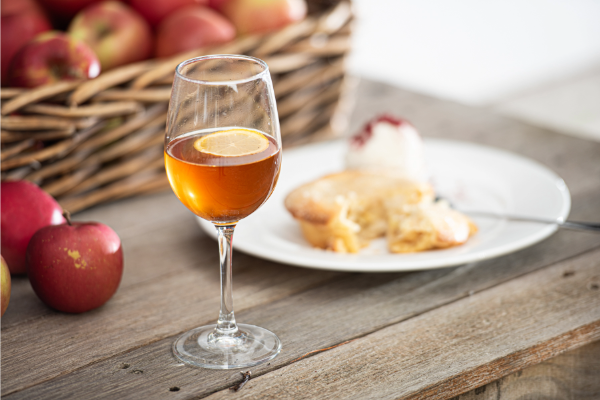
A: We currently make three non-alcoholic sparkling juices including sparkling apple, sparkling pear and cloudy apple. The cider range features a mix of classic apple, pear and an apple-pear blend. Do we have a favourite? It depends on the day and the weather. The cloudy apple juice is always hard to beat, but the apple–pear cider has a lovely balance between sweet and dry.
Q4: What makes Red Hill such a special place to grow apples?
A Our grandparents Wilma and Wally Mock chose Red Hill after years of searching for new farmland when Melbourne’s expansion pushed growers further out. Wally had very specific criteria – the orchard needed to sit on a north-facing slope, and the property here on Mornington-Flinders Road ticked that box perfectly.
The cool climate and regular summer rainfall makes this region ideal for growing apples. With no irrigation or reserve water, we depend entirely on rainfall to see us through the season. The creek behind the orchard often dries up over summer, but the cool climate still gives the apples exactly what they need.
Q5: What’s the biggest challenge of farming here?
A: Labour is one of the hardest things for us. Being zoned Metro Melbourne means we miss out on some of the usual agricultural supports, like working holiday visa programs other farms can access. Finding local staff can be difficult too, as many young people leave the Peninsula for study or work.
Over the last few years fruit bats and birds have also become a real issue, especially during harvest. The bats can strip a crop overnight, so we’ve had to start hand-netting the orchard, a huge task when the trees are as large as ours. Farming organically means our trees grow tall and full, which makes netting them a huge job. And as soon as the nets come off, the birds arrive, so harvest becomes a race to pick the fruit before they do.
We’re too big to do everything by hand but not quite big enough for automation, so everything we do sits in that middle ground; slow, hands-on farming that’s hard work, but it’s also part of what makes our fruit so special.
Q6: What does ‘sustainability’ mean for you and your family?
A: “For us, it’s about regeneration. We’ve been certified biodynamic for around fifty years, and those principles shape everything we do.
It’s about leaving our land better than we found it. We like to say we’re in the business of growing soil. When our grandparents first moved here there was only a thin layer of topsoil, but over the decades we’ve built it back through careful, biodynamic farming. We’ve been able to regenerate our land and contribute to the soil rather than eroding it – it’s the focus of everything we do, from the orchard right through to the cider.”
Q7: How does the local environment shape the flavour of your apples and cider?
A: Being certified biodynamic means you can really taste the difference, the intensity of flavour. Everything starts with the quality of the apples, and that carries straight through to the juice and cider. The cool climate and rich soil here in Red Hill help create that unique crisp, balanced flavour.
Through our school tours and farm visits, kids get to see where their food comes from, to walk the orchard, pick an apple and understand what’s in season. It’s about bringing people a little closer to the orchard, showing how the seasons shape what we grow and just how good it can taste.
Q8: What’s your favourite way to enjoy your cider and which local foods would you pair it with?
A: A tasting flight at the Cider Lounge is always a favourite, especially on a sunny day when it’s served icy-cold and crisp. It goes perfectly with a Peninsula platter of creamy Main Ridge Dairy cheese, or sweet Torello Farm berries and their delicious free-range meats. We’ve made mussels using our cider before instead of white wine, and it gives them a rich, fruity depth that’s hard to beat. We’re lucky to have such an amazing food bowl here and everything pairs so naturally with our cider.
Actually, even though our cider has always been a summer favourite, our mulled cider has also turned us into a winter hot spot. It’s gently warmed with cinnamon, cloves, nutmeg, orange and vanilla, filling the room with the scent of apples and spice.
Q9: Can you share a favourite story?
A: It’s always special when visitors tell us they picked apples here decades ago. We hear stories from people who worked a season in the ’70s or remember buying Mock apples from their local fruit shop in the city. Some even tell us they knew our grandparents, which makes those connections even more meaningful.
We’ve also got regulars who visit every month for their cider or juice – same order, same smile. Over the years, you really get to know people and remember them. That sense of community is what keeps the farm gate so special for us.
Q10: Are there other local producers you love collaborating with?
A: Absolutely! We love a good collaboration.
One of our favourite projects came from a batch of berries that didn’t quite go to plan. Instead of tossing them out, we sent a message to the crew at Devilbend Farm brewery to see if they could use our berry powder. They jumped at the idea, and soon after released a bright-pink sour-berry beer. The colour and flavour are incredible.
Another favourite is our partnership with Bass & Flinders Distillery. Back in 2019, we supplied them with fresh apples that they distilled and have been ageing in oak barrels for the past six years. They’ve just released a beautiful apple brandy, a true local collaboration that’s been years in the making.
Q11: Any secret seasonal releases you can share?
A: There’s always something new brewing here! We were literally talking about a few ideas this morning.
We’ve got some new products on the way and a fresh look coming for a few of our labels, but we can’t give too much away just yet. We’ve never been ones to sit still though; if a season throws us a curveball, we just pivot and try something different. It keeps things interesting for us and for the people who keep coming back.
Q12: If someone’s visiting the Mornington Peninsula for the first time, what’s one local spot they shouldn’t miss?
A: Oh, there are so many, and it really depends on the season! If you’re after good food and views, you can’t go past Foxey’s Hangout for lunch and a glass of wine, or a drive up to Arthurs Seat, and a wander along Flinders Pier is always special too.
We often hear locals say they’ve driven past us for thirty years and never stopped in until now, and they can’t believe what they’ve been missing. We’re guilty of that too in our own backyard. That’s the beauty of the Peninsula; there’s always somewhere new to discover, even for those of us who’ve been here our whole lives.